


The 2026 policy landscape signals a shift toward "tele-permanence" with the bipartisan FY26 funding package extending Medicare telehealth flexibilities through 2027 and the Hospital-at-Home program through 2030. Key updates include the permanent status of most telehealth codes and more flexible Remote Therapeutic Monitoring (RTM) options, such as new device supply codes for shorter 2–15 day collection periods and a 10–19 minute treatment management code. With FQHC/RHC billing via G2025 extended through 2026 and expanded support for behavioral health, CMS is establishing virtual care as a cornerstone of high-quality rehabilitation.
The Arizona Telemedicine Program Blog, Category: Technology
In January 2026, as rural healthcare continues to face challenges like geographic isolation, provider shortages, and limited infrastructure, the Centers for Medicare & Medicaid Services (CMS) Rural Health Transformation (RHT) Program stands out as a pivotal initiative. This $50 billion effort awards funds to all 50 states to bolster rural health systems, with a strong emphasis on innovative capabilities like telemedicine and telehealth.
The Centers for Medicare & Medicaid Services’ (CMS) “Rural Health Transformation Program (RHTP),” notice of funding opportunity (NOFO), published September 15, 2025, provides States with an historic funding opportunity that seeks to help them transform healthcare delivery for their rural residents. Each state can separately apply for a portion of $25 billion dollars of “Workload Funding” which is in addition to $25 billion dollars of “Baseline Funding”.
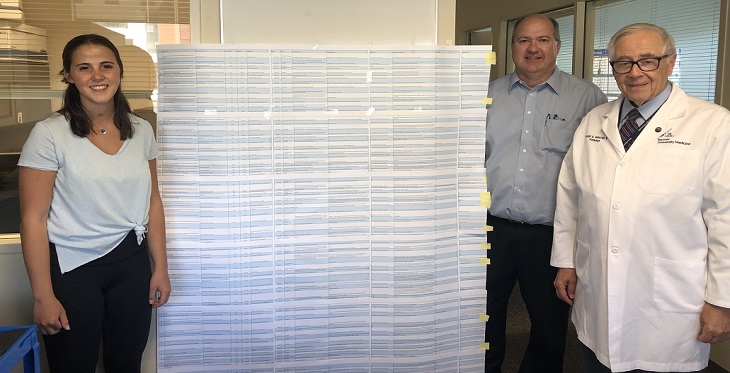
During the eleven weeks I worked for the Arizona Telemedicine Program (ATP) this summer, Dr. Ronald S. Weinstein, director for the ATP was fond of telling me that the most rewarding aspect of a summer research project was having the opportunity to publish a paper at the end of it. While I hesitate to argue with one of the most influential leaders in telemedicine, I have to say that being able to truthfully and unironically add “Proficient in Microsoft Excel” to my resume probably tops my list, for now. But in all seriousness, my summer spent building a portfolio of the telehealth-related research projects funded by the Patient Centered Outcomes Research Institute, (PCORI) and being thrown head-first into the world of scientific research and academic literature that I had only imagined during my first year of college in St. Louis, turned out to be one of the most transformative experiences of my admittedly, young life.

Is telemedicine “as good” as a face-to-face patient visit? Take a few cues from television and movie professionals to make sure!
In today's digital world, we've all become visual image connoisseurs. Part of what we respond to is technical and part is artistic. It's largely the “artistic” portion in which meaning and emotion are created.
As such, telemedicine professionals would be wise to pay attention to certain artistic aspects, when creating the telemedicine patient/provider encounter.
Beyond the 'good enough' technical aspects of the telemedicine encounter – available bandwidth, relatively clear and fluid video, and audio of an acceptable level – there is a higher-quality bar that we, as telemedicine professionals, must strive to reach, in order to be trusted and to overcome objections that our viewers might have. Often, these objections may even be subconscious on the viewer's part, but still come into play, and nothing is harder to resolve than an unconscious objection!